Sunday, April 8, 2012

ARE WE READY TO LIVE IN ORDER TO DIE?

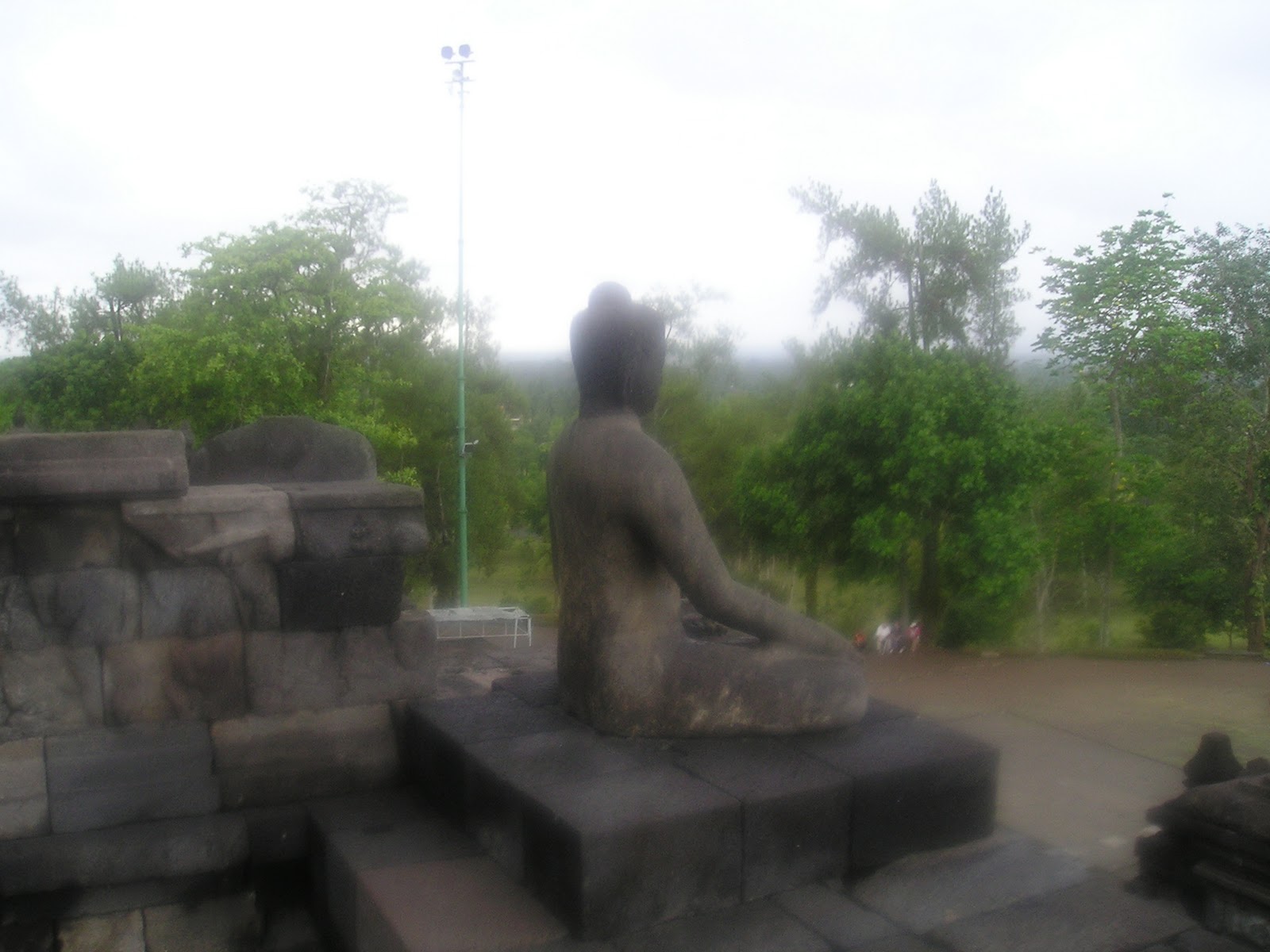
The Image of a Buddha in Meditation


I was reading the book, "Advice on Dying and Living a Better Life" written by H.H. Dalai Lama of Tibet as translated into English by Dr. Jeffrey Hopkins.  From a personal perspective as well as tool for teaching philosophy, I found the book interesting and valuable.  Actually I found this book in a book sale about a year ago.  This is the third time that I am re-reading the book.  The Easter holidays has provided me a respite from my work which enabled me to devote some little time for serious reading.  In this blog entry please allow me to share with you some little nuggets of reflections I had while reading the book.  This is not a comprehensive review and neither do I consider this a review but simply a sharing of my impressions and reflections.  In the book, the Dalai Lama presents intelligibly the major themes or concepts within Buddhist philosophy such as the theory of Impermanence, Karma, and dependent origination.

Our bodies are products of karma produced in a series of life cycles.  Karma means the law of cause and effect.  Karma is different from what is colloquially known in this country.  Here in the Philippines it is pretty normal for anyone to say that one will suffer the fate of karma if one does evil.  Or simply put it we have come to use the term for retribution.  But in Buddhist philosophy from where we got the word Karma, the term has a different dimension in meaning.  Karma is the law of cause and effect.  This means that whether our actions are good or bad it has a corresponding consequence. That present events, situations, mental dispositions and attitudes are product of past action spanning not only our life time but even the past lives we have had.   In fact the cyclic existence of birth, death and rebirth have their origin in Karma.  The affirmation of individuality or the affirmation of the seeming reality of the self is the product of ignorance.  This ignorance fuels karma and is the cause why we are trapped in the cyclic existence in the Samsara.  The basic characteristic of this cyclic existence is suffering.  Suffering stems from our ignorance.  The affirmation that individual phenomena are real is the product of ignorance.  To consider phenomena as permanent is ignorance.  It is like holding on to water with your bare hands only to see them slip away in seconds.  Only the practice of meditation, tantric yoga can help overcome ignorance. 

        Thus confronted by the sea of impermanence the Dalai Lama invites everyone to take refuge in the three jewels, The Buddha, the Dharma (teachings) and the Sangha (the community).  It is the conscious effort that will help us achieve enlightenment through the help of these three jewels.

        The idea of reincarnation has been sensationalized.  Stories were written about it and on the extreme bizarre ideas have been associated with it, such as believing that you were some sort of person in past lives, or that you were a priest in Egypt in ancient times.  I opine that stories like these are borne of ignorance and are meant to entertain of which only the gullible will believe. But to recall our past lives or even if that would be possible which is not the case, is not important anymore.  For the practical reason that it will not help improve our lot in the future and that there is no real self.  The individual “self” that we consider is the product of illusion and ignorance, because there is no self at all.  Thus one manifestation of ignorance is the cherishing of one’s self.

        The body is different from the mind.  This thought is central to the reason why we need to work our own enlightenment so that we could achieve a better reincarnation in the future. Unlike Western thought were the direction is linear, eastern philosophy is cyclic.  Time is immaterial; there is no running out of time.  Thus, achieving nirvana (nothingness) or the Buddhist concept that is roughly equivalent of our concept of heaven or salvation is something that needs to be worked out continuously and even on several lifetimes.  The practice of yoga is hinged on the idea that death being the disintegration of the body elements must be taken cared of because one's state of death or practice of yoga will specify what kind of reincarnation we will have.  That is why the Dalai Lama advised the practitioners to workout and wished for a reincarnation where one will possess intelligence or consciousness that will allow us to continue the practice of yoga so as to achieve progressively until we achieve nirvana.


I would opine that the Dalai Lama has a more complicated teaching about this but this is beyond my reach now.  These are just the nuggets of reflection I got from the Book.  The book was interesting though.  The reason why I love to study Buddhist philosophy is because its rationality blends with spirituality.
This is the kind of thing absent from the empty, empirical sciences of the west.  After all science is not the only source of knowledge.  it does not have the monopoly.


Saturday, April 7, 2012

VISITA IGLESIA: A TRADITION AND A WAY TO PRESERVE AND TO CHERISH

Visita Iglesia is one of the most beautiful traditions in the Roman Catholic Church.  This Lenten pilgrimage is a demonstration of our faith and belief that life is a journey, it is a pilgrimage and as pilgrim our main objective is to reach the goal of our journey.  I would like to share with you some photographs that I have of the different churches in Bicol particularly in the province of Albay where I live. Perhaps in the future or next year if you do plan to visit Bicol try visiting these churches.  Like many places in the Philippines there are beautiful baroque churches here in Bicol made of volcanic rocks or made of brick.  I am sure that the authorities have done a great job of preserving this architectural treasures.  These artifacts are not only places of worship but they speak of our history and soul as Bicolanos and of our great Christian heritage. What saddens me though are the various renovations of the interior that destroyed the originality and the history of these churches.  Some parish priests perhaps do it for purposes of liturgical renewal as they say it what the Vatican II says or PCP II.  But I don't think Vatican II documents authorized the removal of communion rails, choir lofts and pulpits.  I wish that these parish priests could be invited in old places like Europe where even modernity never dared to alter the interiors of great cathedrals.  I hope that our religious authorities will have the sensitivity and appreciation for art and humanities.  Now to explain this beautiful tradition of visita Iglesia may I suggest this blog I have found on the net.  The title of the blog article is  Visita Iglesia, History, Tradition and Significance. 

The Parish of St. Stephen Protomartyr, Ligao, Albay, P.I.

The Cathedral of the Diocese of Libmanan, the Patron Saint is St. James the Apostle

Cathedral of the Archdiocese of Caceres in Naga City, Camarines Sur, P.I.
The patron Saint is St. John the Evangelist

Parish Church of St. Anthony of Padua, Gubat, Sorsogon

Parish Church of St. John the Baptist, Tabaco City, Albay P.I.

Cathedral of the Diocese of Sorsogon, Sorsogon P.I. The Patron Saints are
Peter and Paul

The Parish Church of St. Dominic of Guzman, Sto. Domingo, Albay, P.I.

Parish Church of St. Rose of Lima, Bacacay, Albay, P.I.

Parish of St. Michael the Archangel, Caramoan, Camarines Sur

OBSESSION OR FASCINATION, WHICH EVER...

I don't know why I am always compelled to take snap shots of Mt. Mayon Volcano every time I have the opportunity to do so.  I do not know how to call this compulsion.  Is this obsession or is this fascination? The Webster Concise Dictionary of the Modern English defines obsession as fixed idea or the domination of the mind by one idea.  Well, at this point in time I won't call this obsession I would rather call this experience as fascination.  When one is fascinated by one thing, it draws interest and curiosity and to the highest level love and appreciation.  I would opine that I am not the only one who has this kind of fascination for Mt. Mayon.  Perhaps there are various people with varied interests about this volcano.  From photography, to mountain climbing.  Albay Province is mountainous although not really tall mountains.  But the perfect cone shape of this volcano is what fascinates almost everyone.  It has become a natural landmark and symbol of our identity as Bicolanos.  We find the image of the volcano in our paintings, drawings and even on official seals of government units, offices and schools.  If there is any natural landmark that best symbolize our identity it is Mt. Mayon.

Mt. Mayon has a long history.  It is actually beautiful that is why it is called Mayon.  The name comes from the native term   "Daragang Magayon", which in English is translated as fair maiden or beautiful maiden.  On moderate weather conditions precipitation causes clouds to cover the tip or some parts of the volcano giving it the maiden-like appearance of bashfulness.  By the way in Bicolano culture, ladies or maidens are expected to be bashful especially in the presence of males and strangers.  Thus earning the moniker, "Daragang Magayon".  But Mt. Mayon has its temper too.  It can be unpredictable during eruptions.  It can be violent during volcanic eruptions, but it is also has made the surrounding areas fertile. Thus despite of the dangers, villagers still prefer to live along its side because of the fertility if offers that is best for raising crops and for planting.  But now with the climate change in progress, things will change.  Like us, Mt. Mayon will be also learn how to cope with the changes.  But whatever happens, Mt. Mayon will still retain its iconic image as a symbol of our identity, as symbol of our souls.  Beautiful, strong, temperamental, but resilient always looking forward and adapting to new challenges.


Mt. Mayon as seen on an early morning cruise at Sula Channel in Santo Domingo, Albay

Mr. Mayon as seen from Tabaco Bay

Mt. Mayon as seen from Bacacay, Albay

Mayon as seen from the Ocean

Mt. Mayon and the eastern sea board

Mt. Mayon as seen on the wings of love.

It's like being on Shangrila 

So Near and Yet so Far

Sunday, January 22, 2012

NO PLACE LIKE HOME

Indeed there is no place like home.  I love to travel but I never thought of exchanging my home with any other.  This morning while arriving from Manila, I took this photos of Daraga, Albay and it's environs.  The municipality of Daraga lies at the edge of a mountainous terrain.  Daraga faces the plains along the coasts of the eastern seaboard and the catch basin of Mount Mayon volcano. Those of you who wish to read about the history of Daraga follow the link.

The hilly region on the western side of Daraga

Daraga, Albay, with it;s historic church built on top of a hill

Sunday, November 6, 2011

Ascending the Mountain of the Accumulation of Virtue

In my high school days I voraciously read the collections of the National Geographic magazines in our school library.  I was fascinated by the places I read and the maps presented on the magazine.  I began to develop an interest for Indonesia.  An archipelago with such diverse people and culture.  One thing I really like about Indonesia are it's people.  The Indonesians are very friendly and tolerant.  I would opine that perhaps this sense of tolerance have made Indonesia a nation on its own right and it also contributed to the preservation of various artifacts.  I have read so much about Borobudur in the Central Part of Java. Thus when the opportunity came to visit Indonesia in 2008.  I put on my itinerary a short visit to Jogjakarta.  Jogjakarta like Aceh enjoys a special administrative status being the center of Javanese culture and also of Islamic culture.Way back in 2008 I had this opportunity to attend a training in Bandung and I decided to have a short visit to Jogjakarta.  From Jakarta I took Adam Air for Jogjakarta.  One thing that impressed me was the standard of living which make it easy for anyone to be.  I did not spend a fortune to enjoy this beautiful and mystical place. 


 The Entrance to the Monument


Each of these Contain a Figure of the Buddha

The walls were lined up with epic stories carved in stones

The Sukarno-Hatta Airport in Jakarta

On top of the Hill


There were several of these figures of the Bodhisattva

The City Jogjakarta in the Horizon as seen from Adam Air

Jogjakarta International Airport


Sunday, July 24, 2011

Reminiscing Uppsala

In 2008, I had the rare opportunity to visit Uppsala, Sweden because of the sponsorship I got to participate in the Top Level Seminar on Peace and Security at the Uppsala University.  Prior to this I had my readings about Sweden and I was impressed by the history of the place.  Before leaving for Sweden I was already armed with knowledge of the history of the country and of the locality of which I am staying.  I never expected to arrived on a snowy day and much more on a snowstorm.  They said it was unusual to have that kind of weather early December.  Usually the snow comes later in winter.  Uppsala is a wonderful city.  Indeed it is a University town,  Home to the famous Uppsala University.  I visited some of its important landmarks and I will share with you some of this pictures.  Hope you enjoy.  These are my photos.

Uppsala Cathedral, the National Shrine of the Church of Sweden (Lutheran)

Probaly part of Uppsala University?

The facade of the Cathedral

The Nave of the Cathedral

I observed that sometimes they used different altar tables for Mass

This is the High Altar


The Ornate pulpit at the Cathedral.  I attended one of the noon masses here.  After the mass I greeted the organist and complemented the beautiful music.  I introduced myself as a Filipino and all of a sudden he mentioned about the famous bamboo organ in Las Pinas, Philippines.  That's how popular the Bamboo Organ is even  this Swedish organist knows something about the bamboo organ.


This is me.  While taking a little walk I requested two students to take my photo.


A monument in Honr of Karl Gustav XIV

Saturday, July 2, 2011

Unforgettable Aceh: Nuggets from my Short Visit to Banda Aceh


This Ship was pushed inland by the great tsunami that struck
Aceh several years ago, nos a Museum Piece

My memories bring a year's back to my visit to Banda Aceh in Indonesia.  I really appreciate the opportunities given me by East-West Center in Hawaii to participate in their Summer Institute on International Humanitarian Law in Bali, Indonesia.  This field trip to Aceh was part of this program.  So when they offered this as an addendum to the activity I immediately applied.  I was pretty sure that I dont want to miss this occasion of visiting a wonderful place of which several years ago occupied the headlines because of the tsunami and the subsequent peace agreement beteween the rebels and the Government of Indonesia.  I've read so much about Indonesia and I appreciate its diversity.  from end to end you see a country so vast with different cultures and subcultures.  No wonder the founding father of Indonesia adopted the philosophy of Pankasila - Unity in Diversity.  For no one can really unite this archipelago except for a philosophy of unity that would bind its people.   Aceh has has seen some separatists movements and the later part was more bloody.  But fortunately after the tsunami the rebels and the government went into the negotiating table to talk about autonomy and self-rule. 


The Party Offices of the Ruling Party in Aceh
The photo above is the party offices of Parti Aceh.  We did some focus group discussions with its leaders during our visit.  The itinerary of our visit was so hectic and we only had three days of field trip.  We were so tired but I did my best to keep awake as I did not want every moment of my stay in Aceh escape my attention.

The Capitol Building of Aceh
We did visit also the government house in Aceh.  We had a dialogue with the vice-governor who himself was a former rebel.  After the Peace talks he was elected into various offices.

The Grand Mosque in Aceh.  The Acehenese People are staunchly devout Muslims.  This huge and impressive structure provides inspiration and becomes a source of pride for the people of Aceh.
The people of Aceh are devout Muslims.  I had wanted so much to enter the mosque during Friday prayers but I was not able to get inside since the guard won't let me in because I am not a Muslim.  We stayed outside for a while and listen to the sermon.  After the services were over, we were then allowed to get inside.  I was very curious because I have never been inside a Mosque, having lived in a predominantly Christian environment, I never had the opportunity to be inside a mosque.  But I admire how the men and women of Aceh love and respect their religion.  


The Streets of Banda Aceh are wide and clean.  It is a small city and  in less than a day anyone can go around the city.  Motorcycles are popular means of transport.
There is also a dress code in Aceh.  Islamic way of dressing is enforced by some form of local ordinances.  I think I have no problem with this.  In fact how I wish there would  also be a dress code in our country.  I


Motorcycle is a common means of transport for both men and women

Some Morrocan Inspired Architechture 
How I wish I could visit again this beautiful city.